Security During Art Basel · The People and the Movement
Booz Celestin / Miami Protector · · 7 min read
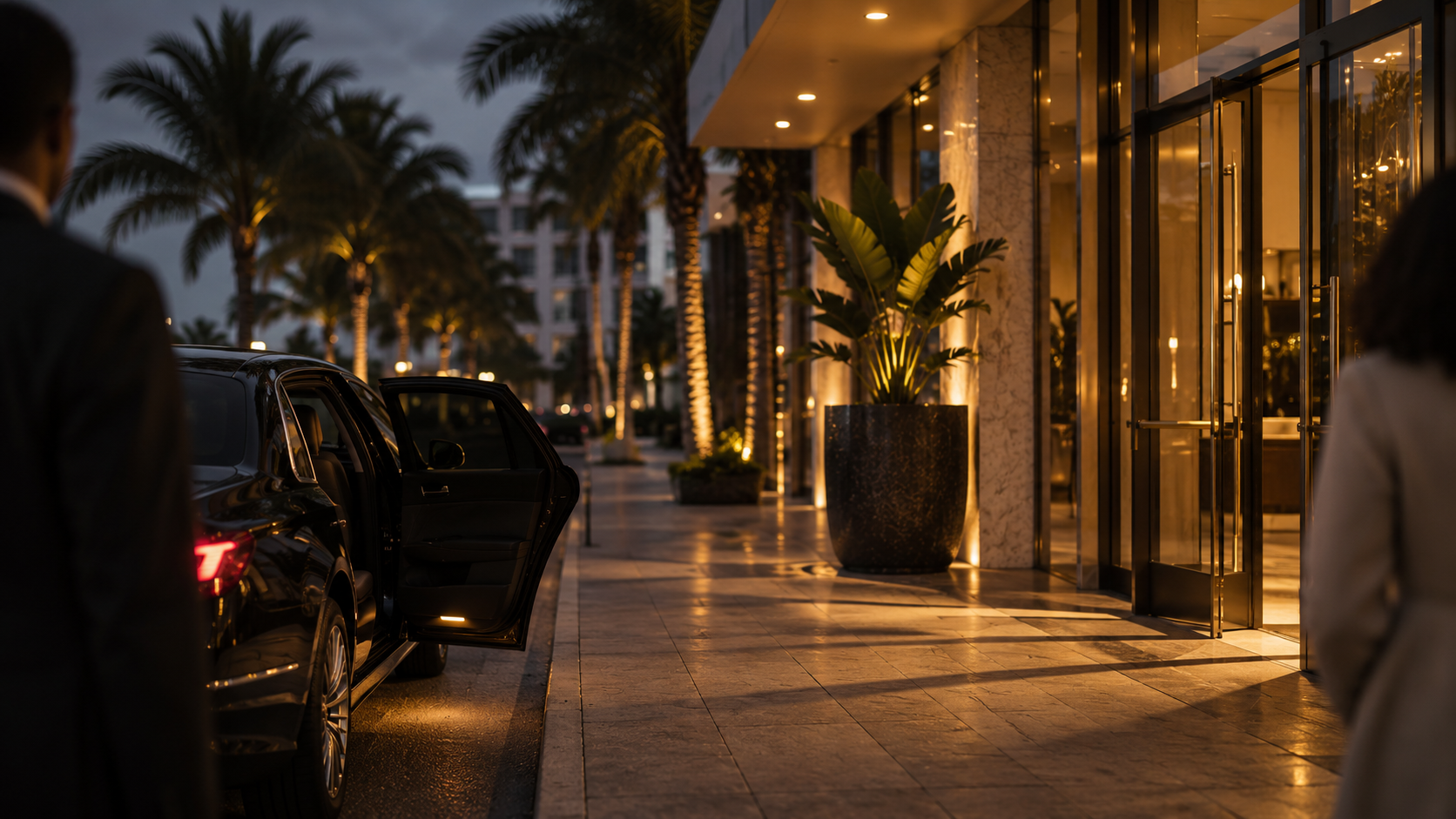
On a weekday afternoon in early December, the few hundred feet of Convention Center Drive outside the fair hold a collector stepping out of a car, a gallery director waiting for a ride that cannot reach the curb, and strangers moving between them. The art inside is crated, insured and watched. The exposure is out here, on the sidewalk, in the gap between a car and a door.
Art Basel Miami Beach runs December 2 to 6 at the Miami Beach Convention Center, invitation-only on the 2nd and 3rd, open to the public from the 4th to the 6th, 11 a.m. to 6 p.m. Around it more than twenty satellite fairs open across Miami Beach, Wynwood and downtown, and the week pulls in more than 100,000 people on a schedule that runs from nine in the morning to three the next. We have written elsewhere about fine art shipping and customs and what the Louvre heist taught us about art security. Both are about the objects. The people who own, show and represent that work face a different set of questions during the week.
Who actually needs protection
Most people at Art Week do not need a bodyguard. Walking a public fair, seeing galleries and having dinner with friends is not a protection problem. It is a scheduling one, solved by a realistic itinerary and an agreed place to be collected.
The week changes that for a smaller group. A collector whose face is known, whose appointments are fixed and whose movements draw attention is exposed in a way the crowd around them is not. A gallery principal moving between a booth, a dinner and a brand event needs those arrivals coordinated. A public figure has to move through a social week without every approach turning into an interruption. For these people, executive protection is matched to the real exposure and the real schedule, not to the prominence of the fair. Being recognized does not, by itself, call for a detail. It does change how an arrival should work.
The four seams
We call the exposed points the seams: the gaps between controlled places, where a principal is neither inside a secured room nor moving in a vehicle, but standing in the open while two arrangements try to meet. The Seam Doctrine that guides our work starts there, and Art Week has four seams that matter.
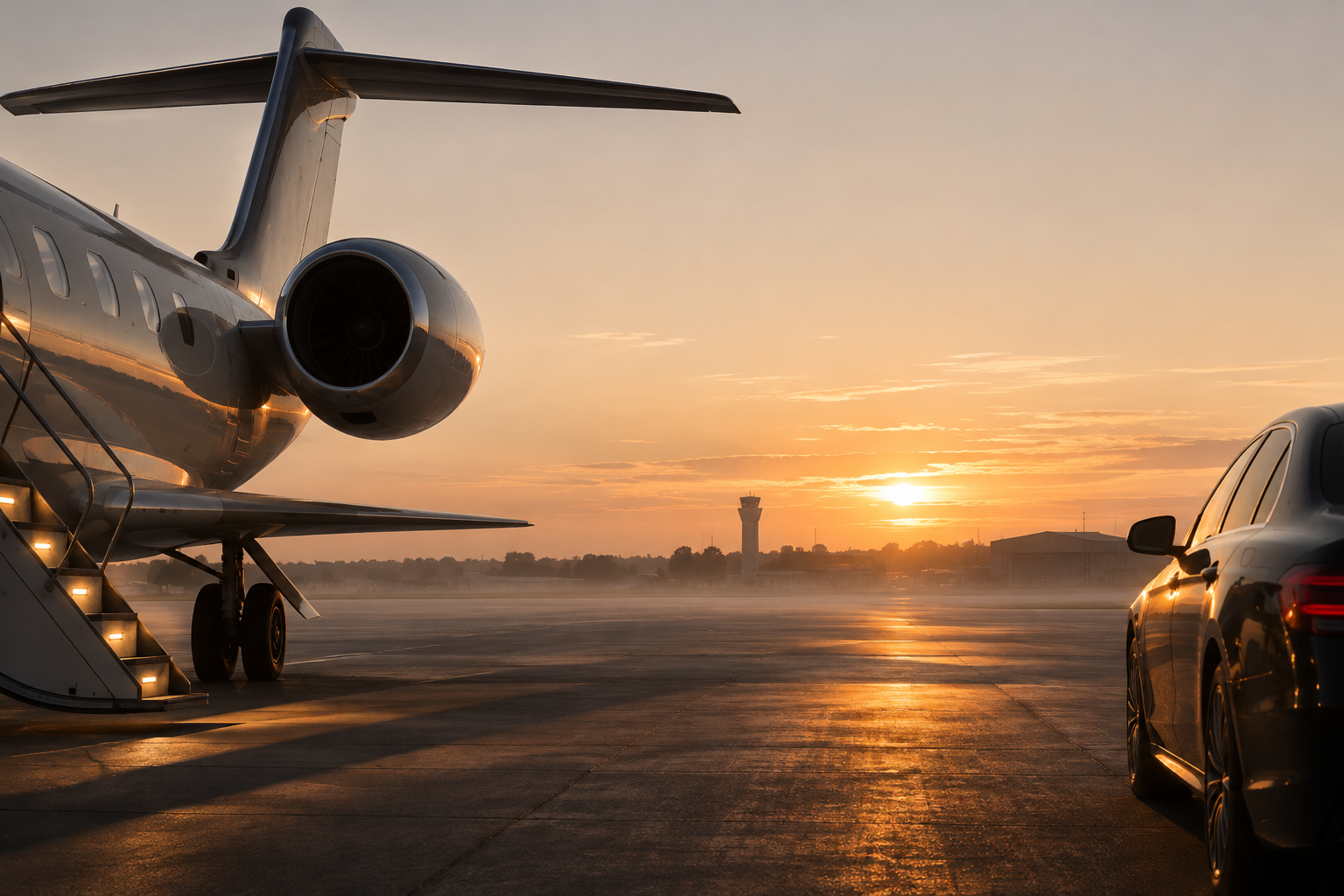
Arrival, at the private ramp. Opa-locka Executive carries the fly-in traffic, heaviest in the first two days, and the Customs window, not the runway, is the real constraint. The aircraft, the car and the protection are three arrivals, not one. Book the aviation slot and the Customs window together, early, and name who owns the handoff before the wheels are down.
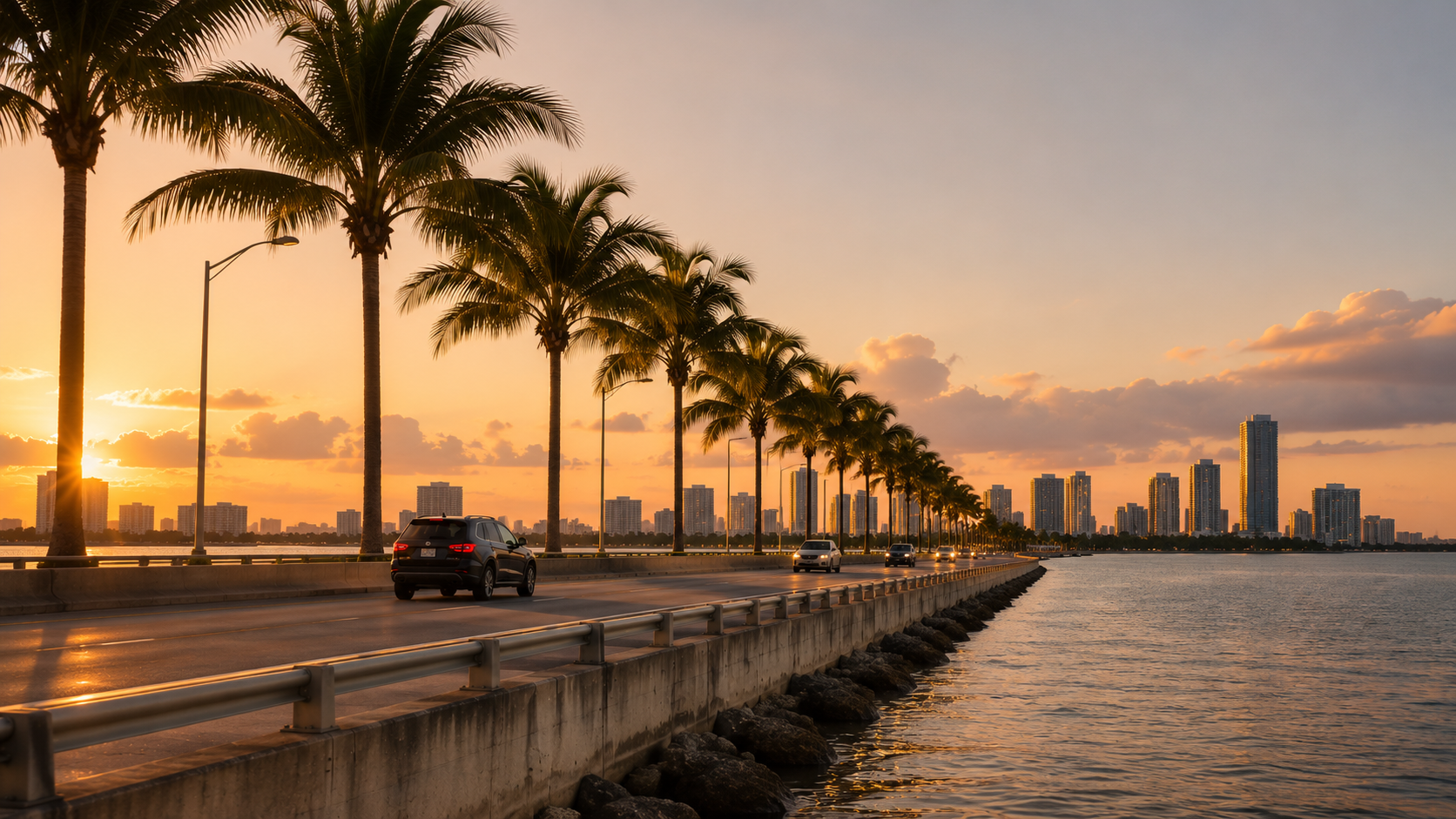
The causeways, on weekday afternoons. Miami Beach does not grow to fit the week. The city adds no lanes and freezes construction, and the causeways off the island are the choke point, worst on weekday afternoons and building toward the weekend. A plan that crosses between beach and mainland four times a day has no slack in it. The fix is not a faster driver but a schedule that expects the delay, and a call ahead to the next appointment when you are running late.
The Convention Center curb. The city publishes its staging: the east side of Convention Center Drive north of 18th Street, Washington Avenue between 20th and 21st. Principals and the public share those few hundred feet. Settle the entrance, the pickup point, who identifies the car and where the principal waits before anyone steps outside.
The hotel door. Many of the top properties hold a single vehicle at the curb. When a principal's car, a family's car and a third arrival all expect that one spot, name the waiting point for the second car before the first pulls in.
Moving through the week
The rest is geography. The satellite fairs scatter the crowd: Design Miami on the adjoining grounds, Untitled Art and InScope on the sand along Ocean Drive, Art Miami and CONTEXT across the bay at One Herald Plaza. Appointments that sit near each other should be grouped, so the day is spent at the fairs and not crossing the city to honor the order things were booked in. The free water taxis between downtown and the beach, and a deliberate mainland base, are tools you choose in advance, not fixes you reach for when a transfer stalls.
Event, gallery and dinner coverage
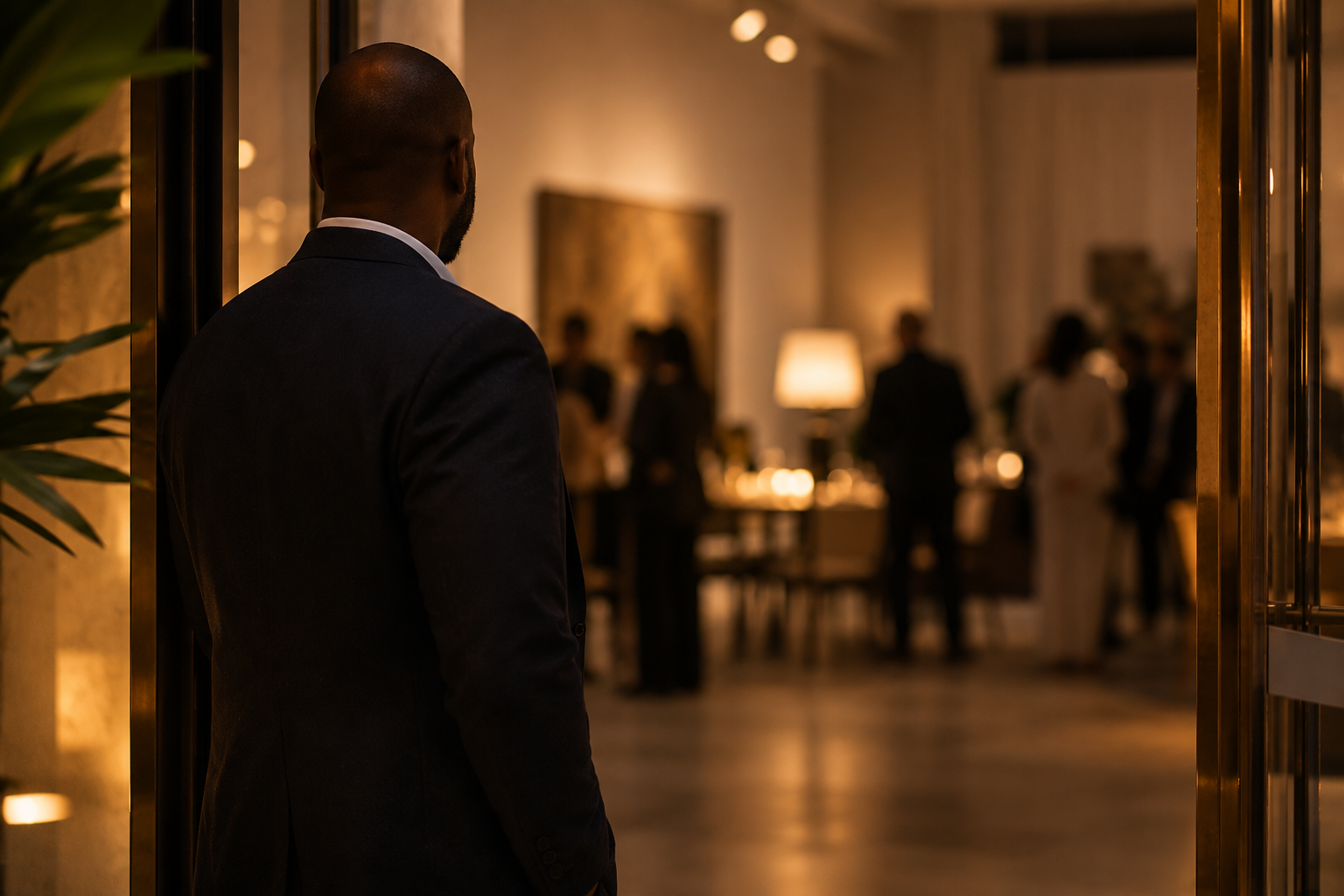
A host carries a wider brief. Before the first guest arrives, someone walks the venue: the entrance, how guests come in, who to reach inside, and what happens when the plan moves. The host's own protection and responsibility for the room are two jobs with a line between them. One person beside a principal does not become responsible for everyone in it. When event security and personal protection are both in play, agree who manages the room and who accompanies the principal, and where an activation involves filming, production security comes in as its own scope.
The posture suits the room. A gallery viewing, a seated dinner and a brand launch do not want the same visible presence, and the same one will not fit all three.
Why discreet fits the week
Art Week is a social and professional week before it is a security problem. People are there to look, to meet, and to have conversations that do not run to a schedule. Protection that keeps interrupting them is badly matched to the work. When protection is needed, covert coverage can fit: the officer dresses for the room and stays close without becoming the thing everyone notices. Discreet is not vague. Ask what the approach involves, how the officer reaches you, and where they will be during an appointment. Covert protection does not open an invitation-only door or stand in for the venue's own arrangements. Its value is plain: you move through your week, with support where the week leaves gaps.
Plan early, brief clearly
Art Week takes up protection availability faster than anything else on Miami's calendar. With a real requirement, book against your known dates and commitments and let the social schedule fill in later. Waiting for the last dinner to settle is how good coverage gets booked out. The Miami security calendar is a reference for the week's shape.
Brief it around the people, not the vehicles: who is traveling, whether their attendance is public, who stays together, which commitments cannot move, and which events you are hosting rather than attending. A provider should be able to tell you what they need to know and why, and a good plan reads clearly to the person receiving it, not only to the people delivering it.
When you don't need it
If your week is a public fair, some galleries and ordinary dinners, you probably need a better transport plan and a named meeting point, not a bodyguard. Those are worth getting right on their own. A detail during Art Week should answer a specific need about the people attending, not the size of the event.
If your situation is different, start with who is coming, your dates, and the movements you need help coordinating. You can reach Miami Protector on WhatsApp or through the contact form.
Frequently asked questions
Do I need a bodyguard to attend Art Basel Miami Beach?
Most people do not. Consider it only when your visibility, privacy needs or responsibilities create a specific requirement that an ordinary transport plan does not cover.
Will personal protection get me into invitation-only events?
No. Admission and protection are separate arrangements. Confirm invitations and venue access on their own.
When should I arrange it?
As soon as your dates and likely requirement are clear. The week puts heavy pressure on availability, and the planning that makes a detail effective takes time.